Whatever the origin of your beans, and however large the coffee industry is there, growing and harvesting and preparing them for export happens in much the same fashion. There are five basic steps: picking, pulping, fermenting, washing and drying.
Coffee grows best at altitude — say 5,900 feet — in subtropical climates, and it is harvested once a year. About 79% of the world’s coffee comes from arabica, with robusta the second most common.
Picking
Harvesting tends to be a family affair, and often several families or a whole community work together. Growers set out early and pick by hand until sunset. Only the ripe red cherries come off the tree; the green ones are left to mature.
Pulping
At the end of the day the harvest is poured into the pulping machine — a simple wooden thing with a large handle, churned to strip the red skin and reveal the bean. The beans fall into a long open bag at the front; the skins drop to the ground.
This has to be finished within ten hours of picking, or the beans begin fermenting inside their own skins, which is not the fermentation anybody wants.
Fermenting and washing
The pulped beans are rinsed and left in tied bags to ferment overnight. The next morning they are washed in large buckets until clean — anywhere from three times to a dozen.
The washing does two jobs. It removes the remaining fruit juices, and it sorts: the overripe and underripe beans that slipped into the sack during picking float to the top and are skimmed off. What is left sinks, and what sinks is what you drink.
Drying, and then people
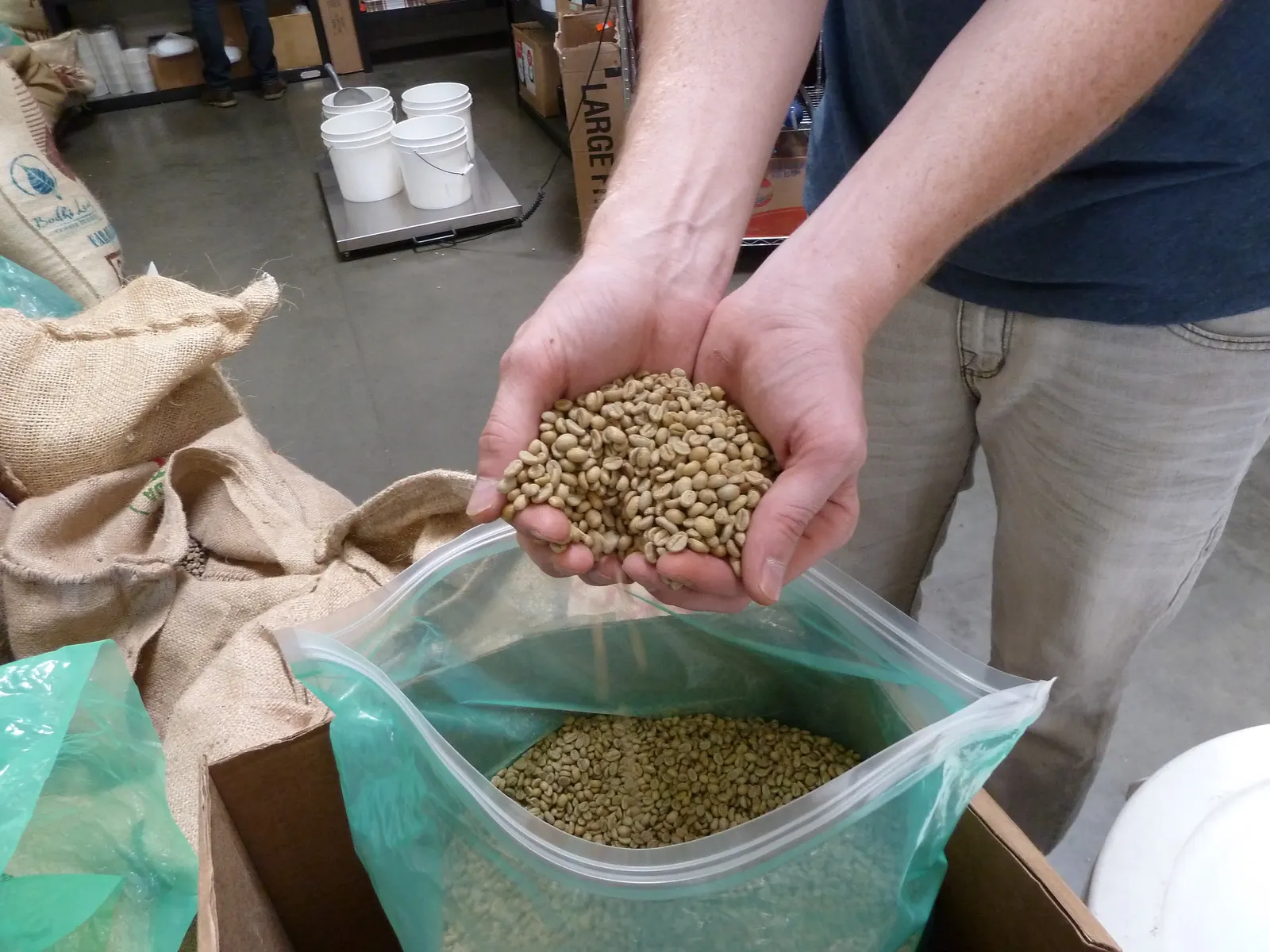
The beans are poured out to dry and raked into rows. After that, some growers roast their own if they have access to a roaster. Most sell the raw beans — to a cooperative, a plant, a national federation, or directly to a buyer.
Beans that go to a plant are sorted again, and this stage is almost always done by hand, usually by a group of women, removing small stones, browned beans, beans still wearing their skins, and anything defective. Then it is roasted, ground, cupped and prepared for sale.
It is worth holding all of that in mind next time a bag seems expensive. By the time coffee reaches a roaster it has been touched, individually, by a remarkable number of people — and every one of the five steps above can be done well or badly. The roast gets the credit. The roast is the last twelve minutes.