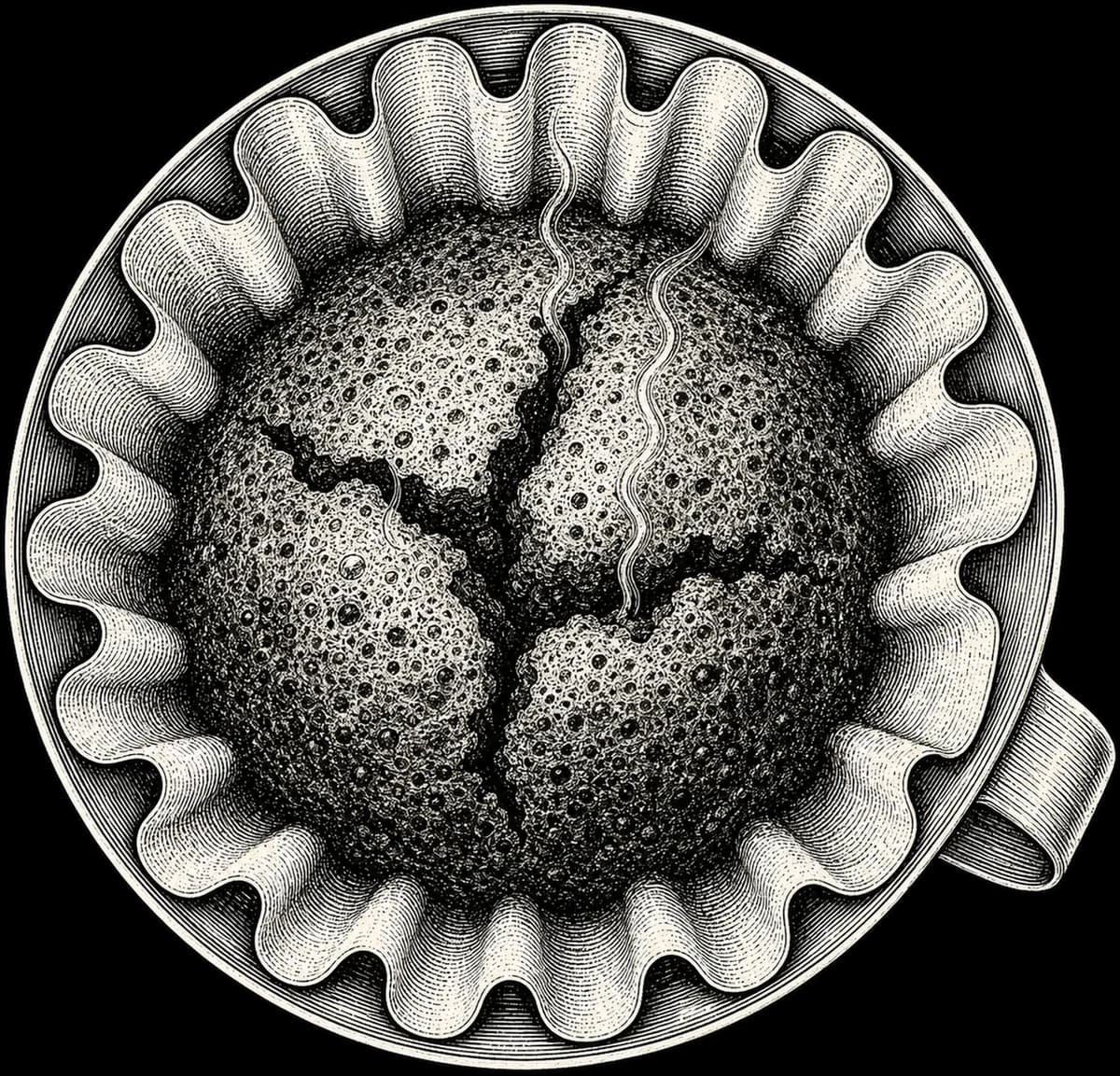
If you’ve ever poured hot water onto fresh coffee grounds and watched them swell up and fizz, you’ve seen the bloom. That foaming is carbon dioxide escaping — gas that got trapped in the beans when they were roasted and has been slowly leaking out ever since. Fresher coffee has more of it.
The gas is a problem, because it pushes water away. Water that can’t get to the coffee can’t pull any flavor out of it. So almost every brewing method starts by wetting the grounds, waiting while the fizzing dies down, and only then brewing properly. That pause is called the bloom, and it’s free.
We ran a coffee company for four years and we were sloppy about it. Worth admitting in public.
Not that we skipped it — everybody splashes a bit of water on first. But we treated it as a formality. Splash, count to twenty, crack on. Then, somewhere in the long quiet, we actually followed James Hoffmann’s pour-over method properly, on a scale, to the second, and the cup was noticeably better. Not subtly-better in a way you talk yourself into. Better in the way that makes you check whether you used different beans.
Three things we had wrong
Not enough water.A splash doesn’t wet all of it. Twice the coffee’s weight does — thirty grams of water for fifteen grams of coffee. Dry patches in the middle stay dry, then start giving up their flavor late and out of step with everything else.
Not long enough.Twenty seconds isn’t enough for fresh coffee to finish fizzing. Forty-five is. If your beans were roasted in the last week you can watch it still going at thirty.
No stir.This is the one that actually mattered. A stir, or a firm swirl of the whole brewer, so everything is genuinely wet. It feels fussy. It’s the difference.
Why this is worth a whole entry
Because it’s the cheapest improvement available to anybody. It costs nothing, needs no equipment you don’t already own, and takes twenty-five extra seconds. Every other upgrade in coffee — the grinder, the kettle, the beans — costs money. This one is just paying attention slightly longer at the start.
It’s also mildly humbling. We sold coffee to several thousand people while getting a free step wrong. Nobody was harmed. But if you’d asked us in 2015 whether we knew how to brew, we’d have said yes without hesitating, and we’d have been overstating it.
Watch his video rather than trusting this summary. He’s better at this than we are, which is rather the point of the entry. And if your coffee is coming out wrong in ways this doesn’t explain, bitter and sour have opposite fixes.